Back to blogs
AI-Powered Automotive Inventory Optimization: How to Balance Vehicle and Parts Stock

Excellon Contributors
Excellon Software brings fresh perspectives and insights on the trends shaping global sales and service networks for OEMs and distributors. Stay tuned as we explore how the Excellon Dealer Management System empowers businesses with cross‑border efficiency, intelligence, and competitive advantage.
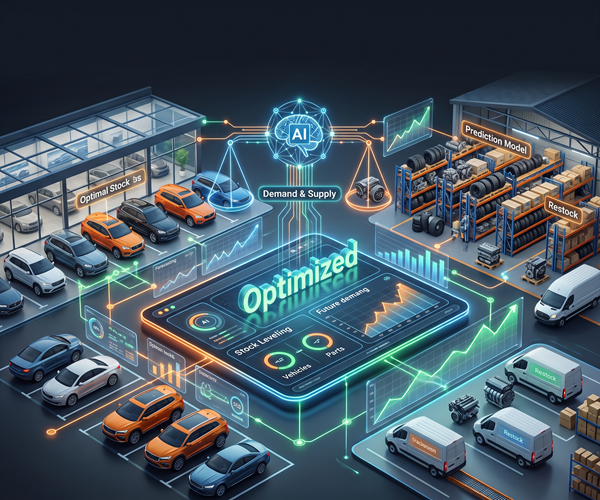
AI-powered automotive inventory optimization uses artificial intelligence (AI) to help businesses forecast demand, plan stock levels, and decide where vehicles and parts are needed. By studying sales trends, current inventory, and regional demand, AI can help businesses make better stock decisions instead of relying only on manual reports and past experience.
For vehicle manufacturers (OEMs), distributors, and dealerships, the aim is simple: keep the right inventory in the right place at the right time.
What Is Automotive Inventory Optimization?
Consider a dealership that has several vehicles of one model but very few of another model that customers are asking for. The dealership may have plenty of stock overall, yet it could still be missing sales because the available vehicles do not match customer demand.
The same problem can occur across warehouses and dealer locations. One location may have excess stock while another is waiting for a delivery.
Inventory optimization helps businesses understand these differences and plan accordingly. AI makes this process more useful by studying a wider range of information and identifying patterns that may be difficult to spot manually.
Why Is Automotive Inventory Management Challenging?
Managing automotive inventory involves more than counting vehicles and spare parts. Demand changes with customer preferences, regional conditions, seasonal trends, vehicle models, supplier delivery times, and many other factors.
Three common problems make inventory planning difficult.
1. Excess vehicle stock
2. Unexpected stock shortages
3. Poor visibility across locations
A distributor might have spare parts available in one warehouse while another warehouse faces a shortage. Without a clear view of stock across the network, teams may place new orders when transferring existing stock could be a better option.
These problems can affect profits, customer satisfaction, and daily operations. Better inventory planning helps businesses respond before small issues become larger ones.
How Does AI-Powered Automotive Inventory Optimization Work?
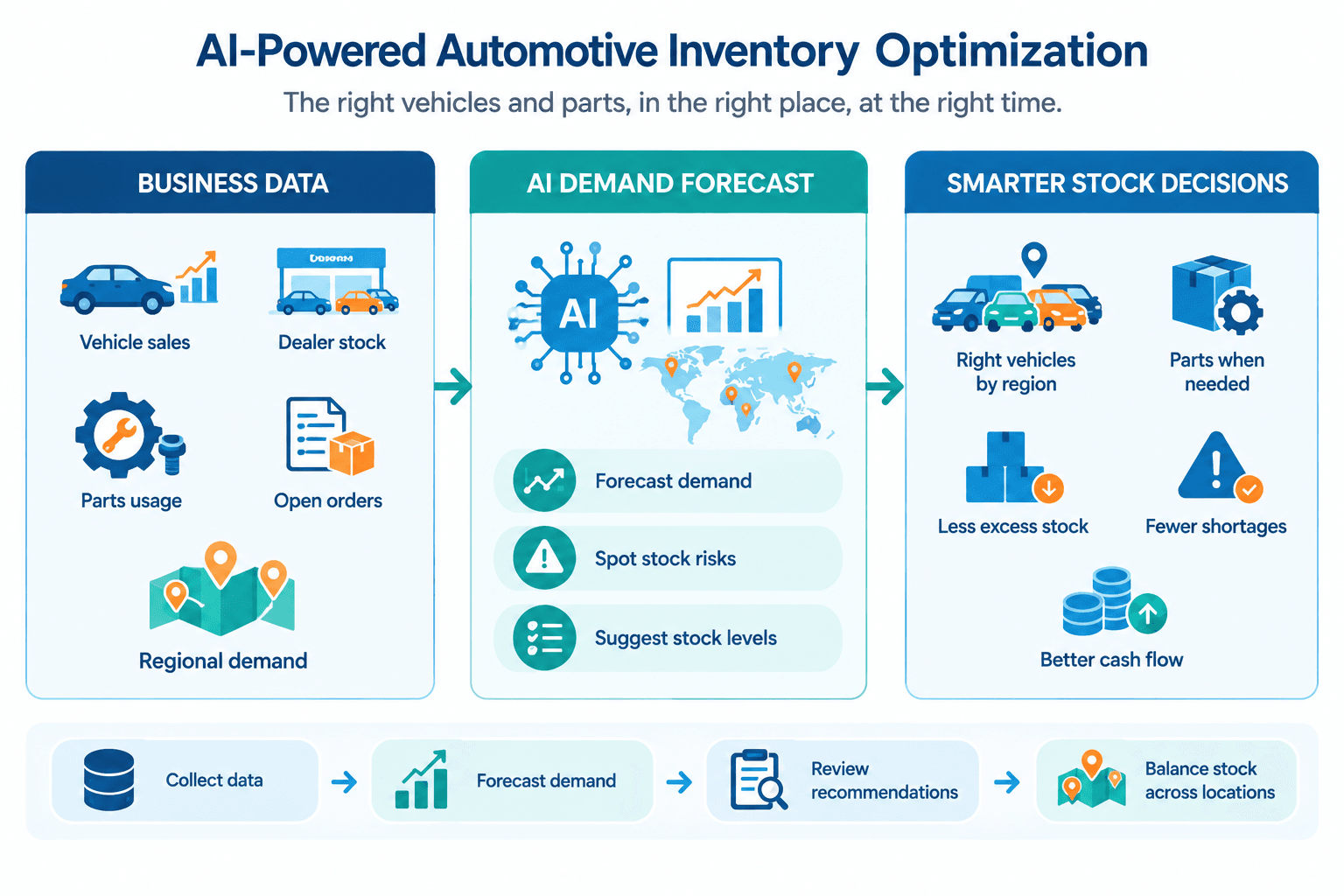
1. Collect and connect inventory data
The system gathers relevant information from available business systems, such as vehicle sales, current stock, customer enquiries, spare parts usage, open purchase orders, supplier lead times, and stock transfers.
Regional sales trends and seasonal demand can also help explain why some products sell faster in one location than another.
The more complete and reliable the data, the more useful the insights are likely to be.
2. Forecast future demand
For example, if enquiries and sales for a particular vehicle model are rising in one region, the system may identify a potential increase in demand. The inventory team can review this information before deciding whether to increase stock.
Forecasts are estimates, not guarantees. Their value comes from helping teams prepare for possible changes instead of reacting only after demand increases.
3. Identify inventory risks
This allows inventory managers to focus on the areas that need attention instead of reviewing every record manually.
4. Recommend stock adjustments
Based on the available data, the system can support decisions about future orders, replenishment quantities, and stock transfers between locations.
Managers can review these recommendations alongside budgets, supplier commitments, delivery costs, and local business needs before taking action.
The goal is not to keep less stock at any cost. It is to keep stock that matches the business’s actual requirements.
How Can AI Improve Vehicle Inventory Management?
AI can help teams understand which models, variants, or vehicle types may be in higher demand. By comparing sales history, current stock, regional trends, and available customer enquiry data, the system can help identify possible gaps between supply and demand.
For example, a model may be selling well in one city but moving slowly in another. This insight can help the business review future stock allocation and decide whether some vehicles should be sent to locations where demand is stronger.
Such decisions still require human judgment, especially when delivery schedules, local preferences, and market conditions change. AI provides additional information to make that judgment more informed.
How Can AI Improve Inventory Across Dealer Networks?
For an OEM or large distributor, inventory management becomes more complex when stock is spread across multiple warehouses, depots, and dealerships.
AI-powered inventory optimization can help bring demand and stock information together, giving teams a clearer view of what is available and where it may be needed.
For instance, one dealer may have excess stock of a particular product while another is facing a shortage. Better network visibility can help the distributor assess whether a transfer is practical before placing another purchase order.
This approach can support more balanced stock levels across locations, reduce unnecessary duplication, and help businesses plan distribution around regional demand.
What About Spare Parts Inventory?
Spare parts remain an important part of automotive inventory planning. However, their demand patterns differ from vehicle sales, so businesses need to consider factors such as parts usage, service activity, vehicle age, and supplier lead times.
AI can help teams estimate future requirements and plan replenishment, making it easier to balance parts availability with inventory costs.
It can also support the early identification of slow-moving parts that may no longer be needed in the same quantities.
For a deeper look at this specific problem, read our article on how predictive analytics helps prevent dead stock in spare parts inventory.
What Are the Main Benefits of AI-Powered Inventory Optimization?
When supported by reliable data and well-managed processes, AI can help automotive businesses improve inventory planning in several ways.
Better use of working capital
More informed purchasing decisions can help reduce money tied up in unnecessary stock, leaving businesses with greater flexibility to support other operations.
Fewer avoidable stock shortages
Demand forecasts and inventory alerts can help teams prepare for expected needs before shortages affect sales or service.
Smarter stock allocation
Businesses can make better-informed decisions about where vehicles and parts should be held, based on demand across locations.
Improved customer service
Better stock availability can help dealerships respond to enquiries more confidently and reduce delays caused by missing products or parts.
Less manual reporting
How ExcellonPulse Supports Smarter Inventory Decisions
With relevant data from sales, inventory, and service operations, AI-driven insights can help teams understand changing demand and make better-informed stock decisions. The aim is to connect information across business functions so that inventory planning is not based on isolated reports.
Learn more about ExcellonPulse AI and the Excellon Dealer Management System.
Final Thoughts
Automotive inventory optimization is not simply about keeping more stock or reducing stock levels. It is about finding the right balance between customer demand, product availability, and the money invested in inventory.
AI can help dealerships, distributors, and OEMs forecast demand, identify potential stock risks, and make better-informed decisions across their networks. When combined with reliable data and human experience, it can support more effective planning for both vehicles and spare parts.
The real value of AI-powered automotive inventory optimization is simple: helping businesses keep the stock customers need, where they need it, without tying up money unnecessarily.
Frequently Asked Questions
What is AI-powered automotive inventory optimization?
It is the use of artificial intelligence to study sales, demand, and stock information so automotive businesses can make better decisions about what to stock, how much to order, and where inventory is needed.
Can AI optimize both vehicles and spare parts?
Yes. The same inventory planning approach can support both, but each requires suitable data and forecasting methods. Vehicle demand may depend on sales trends and customer enquiries, while parts demand may also depend on service activity, vehicle age, and parts usage.
Can AI help reduce excess vehicle stock?
AI can identify demand patterns and highlight possible gaps between sales and available inventory. These insights can help dealerships review future orders and stock allocation, although results depend on data quality and business decisions.
Is AI inventory optimization useful for distributors and OEMs?
Yes. It can help them compare inventory and demand across warehouses, depots, and dealership networks, supporting better stock allocation and replenishment planning.
You may also Like

AI-Driven Dealer Management System: The Future of Intelligent Dealer Network Management
The Hidden Cost of Waiting: How Parts Delays Destroy Service Bay Efficiency


Our Partners

Our Partners
© 2026 Excellon Software Private Limited. All Rights Reserved.