
Back to blogs
Stop Wasting Capital: How Predictive Analytics Eliminates Dead Stock in Spare Parts Inventory

Excellon Contributors

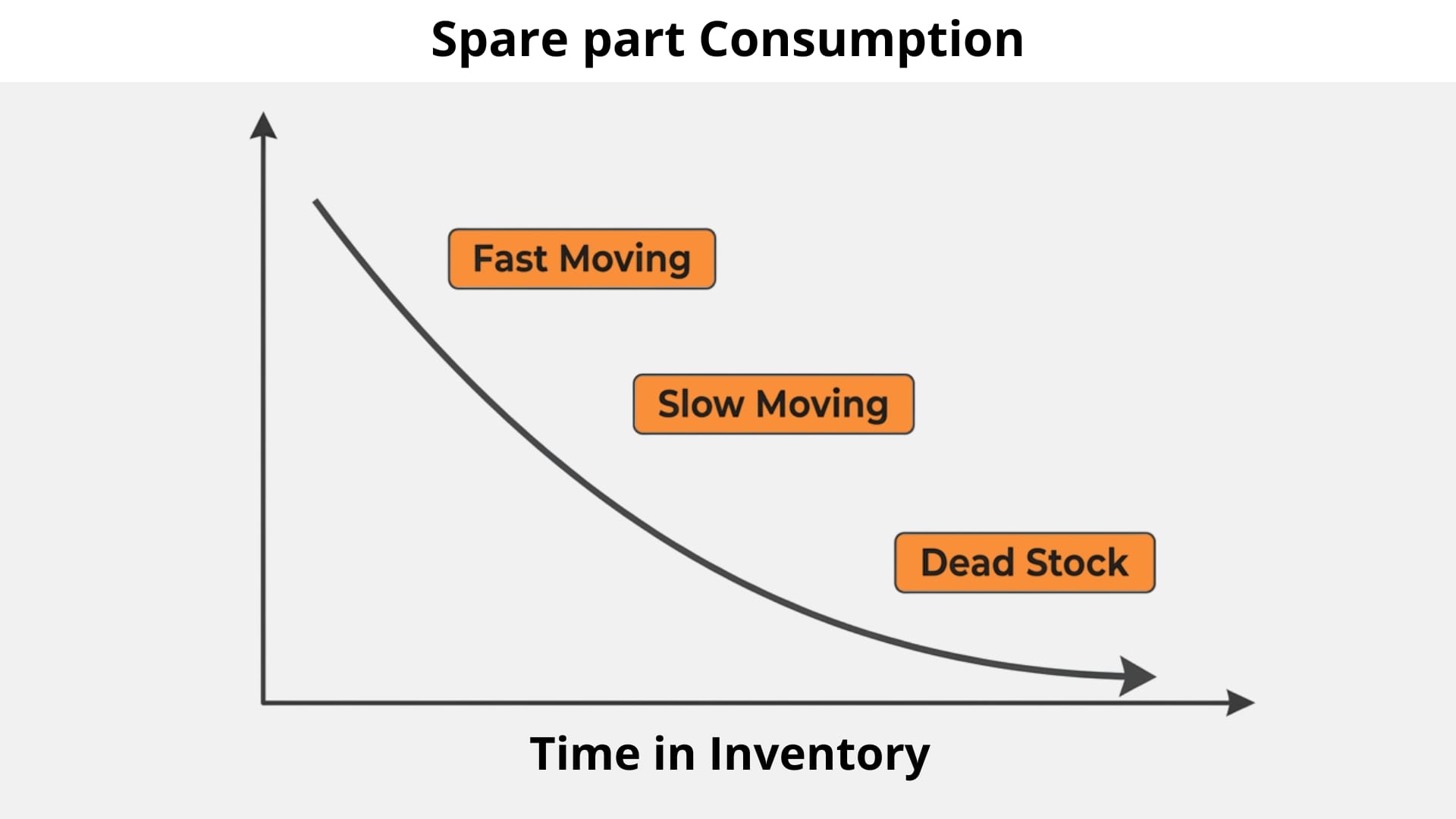
Service organizations carry thousands of SKUs across warehouses and dealer locations. Maintaining inventory is very essential for smooth service operations, but, not all these parts are used regularly. Some parts move very slowly and sit in storage for long period without any demand. Over time, these slow-moving parts begin to accumulate and quietly turn into dead stock.
When organizations look at spare parts inventory across the entire network, it becomes difficult to identify which parts are truly essential and which are slowly losing demand. This is because each spare part is linked to several factors such as vehicle lifecycle stages, maintenance schedules, and regional usage patterns.
How Spare Parts Quietly Become Dead Stock?
Spare parts demand is usually unpredictable, these parts are used only when vehicle fails, during maintenance activities, or when different locations operate different numbers of machines. That’s why it is difficult for organizations to accurately forecast when a particular part will be needed.
Organizations keep extra spare parts at different locations to avoid vehicle downtime. Since breakdowns can directly impact revenue and customer commitments, teams prefer to have parts readily available rather than wait for procurement or transfers.
Over time, this “just-in-case” approach leads to predictable patterns across the organization:
- Safety stock starts increasing beyond actual requirement, just to ensure availability.
- The same parts get duplicated across multiple warehouses instead of being centrally optimized
- Purchasing decisions continue to follow old consumption trends, even when real demand has changed.
- Some parts stay in inventory even when the vehicle they support is no longer widely used
However, when many locations follow the same approach and keep extra stock, the overall inventory across the network starts increasing. Gradually, some parts stop moving regularly and remain in storage for long periods. These parts were originally stocked to ensure availability, but over time they begin appearing in inventory ageing reports as items that have not been used for months or even years.
Explore Further: ExcellonPulse: The most advanced AI engine built for OEMs & distribution networks
How Predictive Analytics Identifies Dead Stock Before It Happens?
At the operational level, teams usually realize that certain spare parts are slow-moving or no longer being used only after those parts have already stayed in stock for a long time without any demand.
But predictive systems work differently. They analyze early signals such as demand changes, usage patterns, or vehicle lifecycle trends, by identifying these signals earlier, they help organizations spot the risk of slow-moving inventory before it actually becomes visible in reports.
Historical parts consumption patterns
Vehicle age and installed base distribution
Parts that were frequently required earlier may start seeing less demand, while newer vehicles may require different components. By tracking where different types of vehicles are in operation and how old they are, organizations can anticipate where spare parts demand may decline or shift to other locations in the future.
Maintenance and service activity
Stock movement trends
Activities such as internal transfers between warehouses, picking parts for service, or moving stock from one location to another indicate that the inventory is active and supporting operations.
However, if spare parts remain spread across warehouses but there is very little movement or transfer activity, it suggests that the parts are not being used frequently. This usually indicates that the connection between inventory and actual service demand is becoming weak, which may eventually lead to slow-moving or dead stock.
Inventory ageing patterns
Inventory ageing classifies stock based on the number of days it has been in the inventory (from purchase or last movement).
For Example, if a spare part has been in storage for a long time, shows very little movement, and its consumption is also declining, then it indicates that the part may be slowly losing its relevance.
By monitoring how long inventory stays in this inactive or low-movement state, OEMs can identify parts that are gradually becoming unnecessary before they completely turn into dead stock.
What OEMs Can Do Once Dead Stock Risk Is Identified?
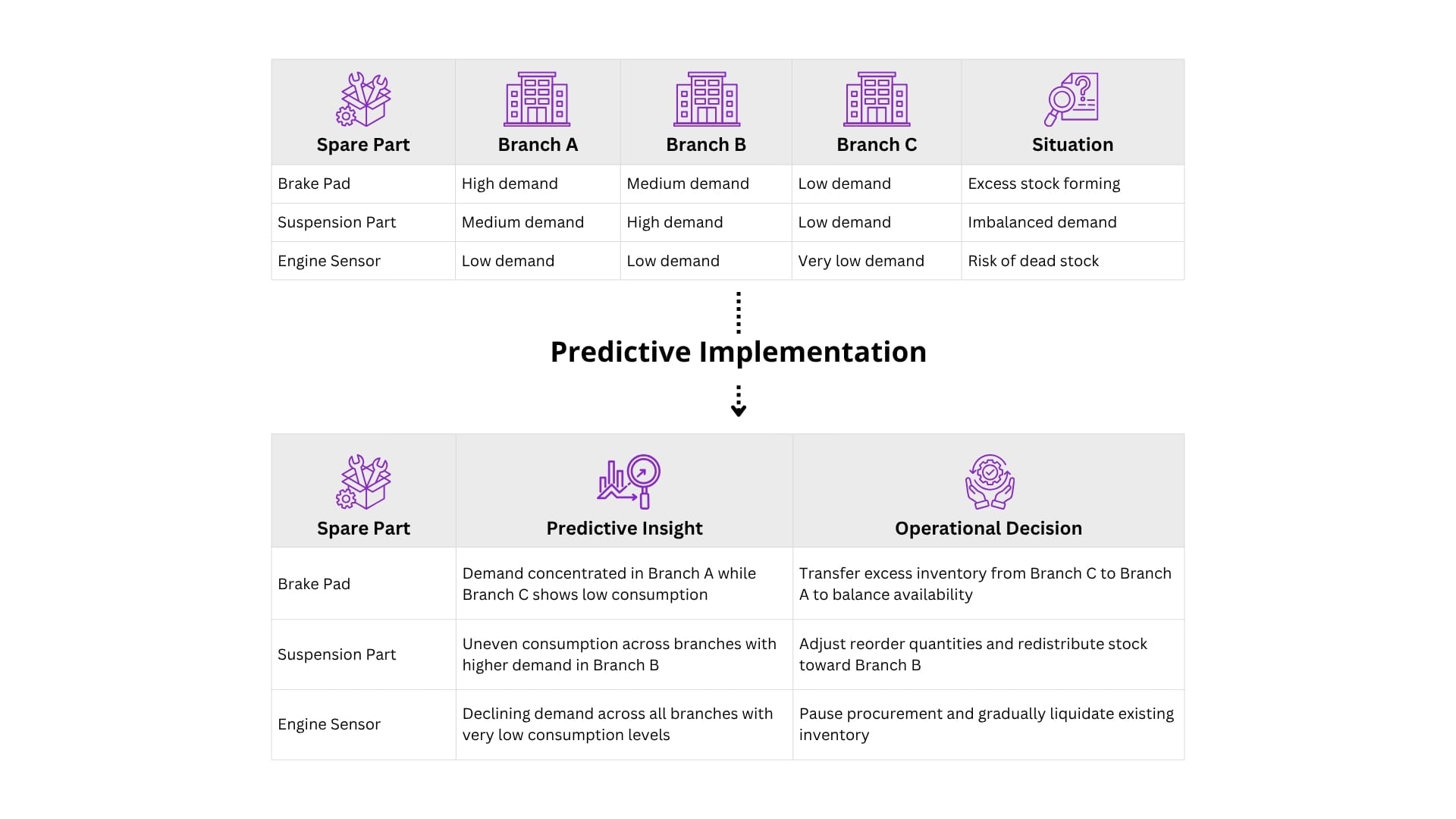
At this point, businesses still have time to take corrective actions like adjusting procurement, redistributing stock, or reducing future orders to avoid losses.
1. Redistributing inventory across branches
Demand for spare parts is not the same across all locations. A part that is rarely used in one warehouse may still be needed frequently in another location because the number of machines or the service activity there may be higher. When OEMs have visibility across the entire network, they can move such parts from low-usage locations to high-demand locations.
2. Adjusting procurement plans
If data shows that the usage of certain parts is declining, teams can reduce or delay new orders for those SKUs. This prevents from continuously purchasing parts that are already showing lower demand.
3. Preventing duplicate stocking
When the same spare part is stored in multiple warehouses without proper visibility, different locations may unknowingly place new orders for the same item even though it is already available somewhere in the network. So better visibility across locations helps avoid unnecessary repeat purchasing of the same spare part and reduces excess inventory and cost.
4. Liquidating excess inventory earlier
5. Aligning stocking levels with real demand patterns
When stocking decisions follow real-time consumption, inventory stays better aligned with actual service demand, avoiding both overstocking and shortages.
6. Service progress becomes visible to the customer
Business Impact: Protecting Working Capital Through Early Detection
Dead stock directly impacts working capital efficiency. Industry estimates indicate that dead stock costs 25-30%(1) of its value annually in carrying costs.
For organizations managing large spare parts portfolios, inactive inventory can quietly accumulate and create a financial burden.
Early detection helps change this outcome in several ways:
- Reduces the buildup of dead inventory
- Improves inventory turnover across dealer and warehouse networks
- Enables better allocation of working capital across operations
Organizations that introduce predictive(2) visibility into their inventory processes typically experience lower write-offs and stronger working capital efficiency.
Smarter Spare Parts Management with Excellon
Most service organizations generate large amount of data. This data comes from ERP systems, dealer networks, procurement teams, and service operations. The real difficulty is connecting this data to understand how parts inventory will behave in the future.
Excellon Software helps organizations move from reactive reporting to proactive inventory control, enabling earlier interventions before inventory turns into dead stock.
This visibility allows teams to make timely operational decisions such as adjusting procurement cycles, redistributing stock between locations, and rationalizing inventory across dealer and service networks.
Instead of reacting to dead stock after it appears in reports, organizations can take action earlier, while inventory outcomes can still be influenced through operational decisions.
You may also Like