Back to blogs
How Excellon DMS Helps OEMs and Dealerships Manage Warranty Claims

Excellon Contributors
Excellon Software brings fresh perspectives and insights on the trends shaping global sales and service networks for OEMs and distributors. Stay tuned as we explore how the Excellon Dealer Management System empowers businesses with cross‑border efficiency, intelligence, and competitive advantage.

Every warranty claim tells a story. A customer reports a problem, a dealership inspects the vehicle, a technician carries out the repair, and the dealer submits a claim to the manufacturer. What should be a clear process can become complicated when records are incomplete, approvals are delayed, or the dealer and OEM work with disconnected systems.
For dealerships, this means extra administrative work, delayed reimbursement, and more time spent following up on claims. For OEMs, it can mean limited visibility into dealer warranty activity, difficulty identifying repeated issues, and less control over warranty costs.
For OEMs and dealerships looking for automotive warranty management software, Excellon DMS offers built-in warranty management capabilities that connect claim processing with service operations, parts, labour, and claim tracking. This helps teams manage warranty activities in a more organized way, reduce disconnected workflows, and gain better visibility into warranty operations.
Excellon DMS brings warranty management into the wider dealer management workflow, helping OEMs and dealerships manage warranty records, validate claims, track approvals, and gain better visibility into warranty operations.
Instead of treating warranty management as a separate administrative task, Excellon connects it with service operations and related business processes, helping teams work with clearer information and fewer disconnected steps.
Where Warranty Processes Break Down and How an Integrated DMS Helps
Managing warranty claims is often a complex, multi-step process that strains both dealerships and original equipment manufacturers (OEMs). When data is siloed, straightforward repairs quickly escalate into administrative bottlenecks, resulting in delayed reimbursements, avoidable claim rejections, and frustrated service teams. Implementing an integrated Dealer Management System (DMS) bridges these operational gaps by unifying service, parts, and warranty workflows into a single, visible platform.
1. Dealerships Spend Too Much Time Preparing Warranty Claims
For dealership service teams, preparing a warranty claim involves more than filling out a form. They need to collect vehicle details, check warranty coverage, review the job card, confirm parts and labour information, and gather supporting documents. When these records sit in different systems, even a straightforward claim can take extra time.
With Excellon DMS, warranty management is connected with service operations, helping teams access relevant vehicle, repair, and claim information in a more organized workflow. This reduces the need to search across disconnected records and makes claim preparation easier to manage.
2. Poor OEM Visibility Across the Dealer Network
An OEM may work with hundreds of dealerships across different regions, each handling its own warranty repairs and claims. Without a clear view of claim activity, it becomes difficult to identify pending cases, understand where delays are occurring, or determine which dealers need support.
Excellon DMS supports centralized warranty and claim tracking, giving teams a clearer view of warranty activity across their operations. With access to relevant reports, OEM teams can review claim trends, monitor approval patterns, and identify areas that need closer attention.
3. High Re-work Rates from Inaccurate Claims
A missing document, incorrect part number, or mismatch between the job card and the claim can lead to additional checks and repeated communication between the dealer and OEM. These small errors can create unnecessary work for both teams.
By connecting warranty records with service information and supporting claim validation, Excellon DMS helps teams maintain more complete and consistent claim records. Checking the available information before submission can reduce avoidable errors, while final eligibility and approval remain subject to the manufacturer’s warranty rules.
4. Dealers Struggle to Track Pending Claims and Reimbursements
After submitting a claim, dealership teams need to know whether it is under review, awaiting additional information, approved, or rejected. When updates are spread across emails, spreadsheets, and separate portals, following up on every claim becomes difficult.
With warranty claim tracking in Excellon DMS, teams can maintain a clearer record of claim progress and identify cases that require further attention. This helps warranty staff organize follow-ups and gives managers better visibility into outstanding claims and their status.
5. Inability to Track Repeated Failures and Warranty Costs
Warranty data can tell OEMs and dealerships a great deal about their operations. Repeated claims, common rejection reasons, and rising warranty costs may point to process gaps or issues that deserve further investigation. However, these patterns are harder to identify when information is difficult to access or compare.
Excellon DMS provides warranty reporting capabilities that help teams review claim trends, approval rates, and costs. These insights give managers a stronger basis for investigating recurring problems, improving claim processes, and making more informed warranty-related decisions.
6. Disconnected Parts, Service, and Warranty Activities
Warranty repairs often involve several teams. Service advisors record the complaint, technicians carry out the repair, parts teams manage replacement components, and warranty staff prepare the claim. When these activities are managed separately, information can be lost between steps.
Because Excellon DMS brings warranty management into a broader dealer management platform, it helps connect warranty activities with related service and parts processes. This creates a more coordinated workflow and gives teams a clearer view of the information needed to manage warranty work efficiently.
Explore: Excellon warranty management solution boosts customer satisfaction
How Excellon DMS Solves Automotive Warranty Challenges
Excellon DMS includes warranty management as part of its broader dealer management platform. Its value comes from connecting warranty activities with the service and operational information that dealerships and OEMs already need to manage.
Automotive Warranty Management:A Clearer Claims Process
Simplify warranty claims, reduce delays and keep your OEM–dealer relationship strong.
1 Record vehicle and warranty details
Capture vehicle information, warranty period and policy details accurately.
2 Create service job card
Log the service request and document the repair details.
3 Check warranty coverage and eligibility
Verify warranty terms, coverage and eligibility for the claim.
4 Record parts, labour and supporting evidence
Add parts used, labour hours and supporting documents like invoices, photos and repair notes.
5 Submit and track claim with OEM
Send the claim to the OEM and track the status until final approval and payment.
1. Centralized Warranty Records and Configurable Policies
Keeping warranty information organized is essential when a dealership handles many vehicles and customers.
Excellon DMS supports centralized warranty management, making warranty information easier to access and manage. Its automotive solution also describes support for configurable warranty policies, helping businesses manage warranty requirements according to their applicable rules.
This gives teams a more structured way to work with warranty records rather than depending on scattered documents.
2. Connected Service and Warranty Workflows
Warranty claims are closely linked to workshop operations. The repair must be recorded correctly, the parts and labour details must be available, and the information must support the claim being submitted.
Because Excellon DMS brings service management and warranty capabilities into one platform, teams can work with connected operational records. This can reduce information gaps between service advisors, technicians, parts teams, and warranty executives.
3. Claim Validation and Approval Tracking
A well-organized claim process helps reduce avoidable errors and makes outstanding cases easier to monitor.
Excellon DMS supports claim validation, processing, and tracking, helping teams review warranty information and follow claims through the relevant workflow. This improves process visibility while helping staff identify claims that need correction or further attention.
4. Integrated Parts Returns and Cost Controls
Warranty work does not always end when a replacement part is installed. Certain cases may require parts to be returned, examined, or recorded according to the OEM’s process.
Excellon’s automotive solution describes warranty parts ordering and returns capabilities. Together with warranty cost reporting, these features can help organizations maintain clearer records and review the cost and impact of warranty activity.
5. Analytics and AI-Driven Insights for Failure Trends
OEMs and dealer principals need more than individual claim records. They also need to understand how the process performs over time.
Warranty reports can help managers review claim volumes, approval patterns, rejection reasons where recorded, and warranty costs. Excellon’s AI-driven DMS analyzes warranty claims to identify patterns and recommend actionable improvements.
The aim is to turn warranty data into useful information for the teams responsible for service quality, operational efficiency, and warranty performance.
The Benefits of a Unified Warranty Process for OEMs and Dealers
Consider a dealership handling a warranty repair. The vehicle arrives, the service team records the issue, the technician completes the work, and the warranty team prepares the claim.
With disconnected systems, each handoff may require staff to find, copy, or re-enter information. If a detail is missing, the process can slow down.
With an integrated DMS, vehicle and warranty records can be connected with service activities and claim information. The team can prepare and track the claim within a more structured workflow, while the OEM can review submitted information and handle the claim according to its policies and approval process.
The benefits extend to both sides:
For dealerships: Less disconnected administration, clearer claim records, easier follow-ups, and better visibility into outstanding claims.
For OEMs: Better visibility into dealer warranty activity, more consistent claim information, improved reporting, and greater insight into warranty costs and recurring issues.
The result is a more organized warranty process, with less time spent searching for information and more time available to resolve the cases that need attention.
Why Choose Excellon DMS Over Standalone Warranty Software?
A standalone warranty application may address some claim-related tasks, but OEMs and dealerships also need to manage service, spare parts, inventory, and other dealer operations.
Excellon DMS brings these business areas together in one platform, with warranty management built into the wider dealer management workflow.
This integrated approach helps businesses:
- Manage warranty activities alongside service operations.
- Maintain centralized warranty and claim records.
- Validate warranty details and parts and labour information.
- Track claims and review their status.
- Analyze warranty trends, approval rates, and costs.
- Improve coordination between dealerships and OEM teams.
- Support warranty parts ordering and returns.
- Use warranty insights to identify opportunities for process improvement.
The exact workflow depends on the organization’s configuration, applicable warranty rules, and required integrations. However, the core advantage is having warranty management connected to the business processes around it instead of treating it as an isolated function.
For an OEM, this means a stronger foundation for managing warranty operations across the dealer network. For a dealership, it means a more structured way to handle warranty work as part of its daily service operations.
Final Thoughts: Making Warranty Management Simpler with Excellon DMS
Warranty management should not create unnecessary work for the people responsible for serving customers and supporting the dealer network.
Dealerships need a clear process for recording repairs, preparing claims, and tracking outstanding cases. OEMs need reliable information, visibility into warranty performance, and better ways to understand claim trends and costs.
Excellon DMS brings warranty management into an integrated dealer management platform, helping OEMs and dealerships organize claim workflows, improve visibility, and manage warranty operations more effectively.
Explore the Excellon Dealer Management System or learn more about the Automotive Dealer Management System to see how its connected capabilities support sales, service, warranty, and dealer network operations.
Frequently Asked Questions
What is automotive warranty management software?
Automotive warranty management software helps OEMs and dealerships manage warranty records, validate claims, track approvals, and review warranty costs. When integrated into a DMS, these activities can be connected with service and parts operations.
Can Excellon DMS help OEMs monitor warranty performance across dealerships?
How does Excellon DMS help reduce warranty claim delays?
AI can identify demand patterns and highlight possible gaps between sales and available inventory. These insights can help dealerships review future orders and stock allocation, although results depend on data quality and business decisions.
Is warranty management a separate product in Excellon DMS?
You may also like
 BlogAI-Powered Automotive Inventory Optimization: How to Balance Vehicle and Parts StockAI-powered automotive inventory optimization uses artificial intelligence (AI) to help businesses forecast demand, plan stock levels, and decide where vehicles and parts are needed. By studying sales trends, current inventory,...Read More
 BlogAI-Driven Dealer Management System: The Future of Intelligent Dealer Network ManagementAn AI-driven Dealer Management System builds on traditional DMS capabilities by bringing AI-powered insights, predictive analytics, and recommendations into everyday business processes. For automotive original equipment manufacturers (OEMs), distributors, and...Read More
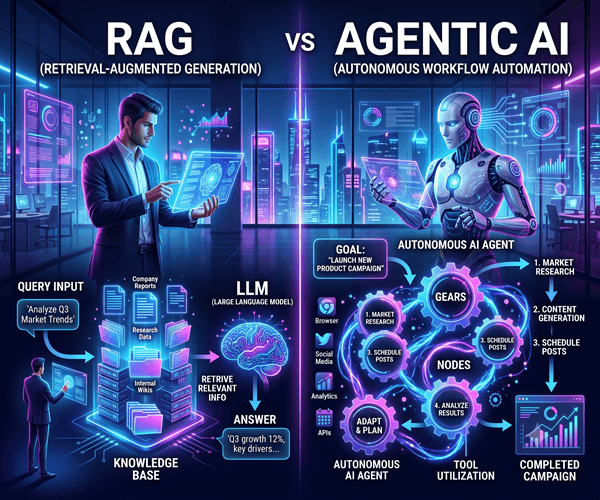 BlogAgentic AI vs. RAG: Understanding the Next Evolution of Enterprise AIArtificial Intelligence is evolving at an unprecedented pace. Just a year ago, most enterprise conversations revolved around Large Language Models (LLMs) and Retrieval-Augmented Generation (RAG). Today, a new term is...Read More