Back to blogs
How AI Demand Forecasting Helps Consumer Goods Companies Prevent Stockouts

Excellon Contributors
Excellon Software brings fresh perspectives and insights on the trends shaping global sales and service networks for OEMs and distributors. Stay tuned as we explore how the Excellon Dealer Management System empowers businesses with cross‑border efficiency, intelligence, and competitive advantage.
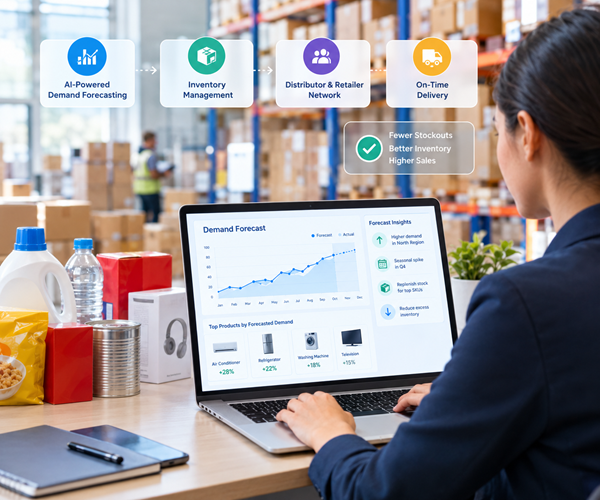
Consumer goods companies need the right products in the right place at the right time. But changing customer demand, seasonal sales, regional buying habits, and supply delays can make this difficult. When demand rises unexpectedly, products may run out of stock. When demand falls, businesses may be left with excess inventory and money tied up in unsold products.
AI demand forecasting for consumer goods helps manufacturers, distributors, and retailers use sales and inventory data to predict future demand and plan stock more effectively. Instead of relying only on past sales or manual estimates, businesses can use AI-driven insights to identify demand patterns, anticipate changes, and make better inventory decisions.
A Sales and Distribution Management System (SDM) helps businesses coordinate sales activities, distributor networks, order management, and inventory planning. Similarly, a Dealer Management System (DMS) helps businesses manage dealer operations, sales, and inventory. Both systems can support better visibility across sales channels and help businesses make informed decisions about stock planning and product availability. When supported by reliable data and suitable AI capabilities, these systems can help businesses respond faster to changing market demand.
What Is AI Demand Forecasting for Consumer Goods?
AI demand forecasting uses artificial intelligence (AI), machine learning (ML), and historical business data to estimate how much of a product customers may need in the future.
Traditional forecasting often depends on spreadsheets, past sales, and manual estimates. AI-based forecasting can analyze larger amounts of data to identify patterns across products, regions, and sales channels.
For example, a consumer durables manufacturer may notice higher demand for air conditioners during summer. A distributor may see more demand for home appliances during festive seasons. A regional sales team may also find that certain products sell faster in specific markets.
AI demand forecasting can help businesses answer questions such as:
- Which products are likely to see higher demand next month?
- Which distributors or regions may need more stock?
- When should the business plan replenishment?
- How could seasonal changes affect product availability?
- Which products may become overstocked or run out of stock?
When these insights are connected to sales and distribution processes, businesses can plan inventory with greater confidence.
Why Do Consumer Goods Companies Face Stockouts?
Stockouts occur when a product is unavailable when a customer, retailer or distributor needs it. They can affect sales, customer satisfaction, and relationships between manufacturers, distributors, and retailers.
Several factors contribute to this problem:
1. Unpredictable Customer Demand
Consumer demand changes with seasons, festivals, promotions, prices, and local preferences. For example, demand for cooling appliances may rise during hot weather, while televisions and other home appliances may see higher sales during festive periods.
If sales and inventory teams do not prepare for these changes, they may order too little stock before demand increases.
2. Limited Visibility Across Distribution Channels
Manufacturers may sell through multiple distributors, dealers, retailers, and company-owned stores. When sales and inventory data are spread across different systems, it becomes harder to understand where products are selling and where shortages may occur.
Without timely information, businesses may continue sending stock to locations that already have enough inventory while other locations face shortages.
3. Delayed Replenishment
Replenishment planning depends on more than the stock currently available. Businesses must also consider incoming supplies, open orders, goods in transit, supplier lead times, and expected demand.
When teams overlook these factors, they may place orders too late or fail to allocate inventory where it is needed most.
4. Manual Forecasting and Disconnected Data
Spreadsheets and manual calculations become difficult to manage as product ranges and distribution networks grow. Different teams may also use outdated reports or conflicting sales figures.
This makes it harder to maintain consistent forecasts and respond quickly to changes in demand.
Explore: Why Excellon Dealer Management System Is the Most Popular DMS in 2026
How AI Demand Forecasting Helps Prevent Stockouts
AI demand forecasting can help businesses move from reactive inventory decisions to more proactive planning. Its value increases when forecasts inform actual sales, stock allocation, and replenishment decisions.
1. Predict Demand by Product and Region
AI models can analyze historical sales, recent orders, seasonal patterns, and other relevant data to estimate future demand.
For example, an electronics distributor may see rising demand for refrigerators in one region and televisions in another. Regional forecasts help teams plan stock according to local needs rather than applying the same assumptions across every market.
This helps sales and distribution teams prepare for demand changes and reduce the risk of product shortages.
2. Improve Inventory Replenishment Planning
Forecasts are more useful when they help teams decide what to replenish and when.
Businesses can compare expected demand with available inventory, pending orders, incoming stock, and supplier lead times. This helps identify potential shortages before they affect order fulfilment.
A well-planned replenishment process can help maintain product availability while reducing unnecessary stock accumulation.
3. Identify Seasonal Demand Patterns
Consumer goods demand often changes throughout the year. Weather, festivals, promotional campaigns, and regional buying habits can all influence sales.
AI-driven forecasting can help identify recurring patterns and estimate when demand may rise or fall. Businesses can use these insights to plan procurement, stock transfers, and distributor requirements ahead of time.
For example, a manufacturer can prepare for increased demand for cooling appliances before summer rather than waiting for orders to rise.
4. Improve Visibility Across Distributors and Retailers
Demand planning becomes more effective when businesses understand how products move through their distribution networks.
Sales and inventory information can help identify distributors with rising demand, locations with slow-moving stock, and areas at risk of shortages.
With better visibility, manufacturers and distribution teams can coordinate stock allocation and make more informed decisions about where inventory is needed.
5. Support Faster, Data-Driven Decisions
Forecasts cannot predict every market change. Unexpected promotions, supply disruptions, or shifts in customer preferences can still affect demand.
However, timely insights can help sales and distribution teams recognize changes earlier and review their plans.
Instead of waiting until a product runs out of stock, teams can investigate demand shifts, review inventory availability, and take corrective action.
How Excellon SDM Can Support AI-Driven Demand Forecasting
Consumer goods manufacturers need more than a demand estimate. They also need effective sales processes, visibility across channel partners, and a clear view of inventory and distribution performance.
Excellon SDM (Sales and Distribution Management System) can be positioned around connecting these business processes, helping organizations manage sales and distribution activities across their networks. Its role in AI forecasting depends on the forecasting and analytics capabilities available in the deployed solution.
Here are the key areas an SDM-led approach can support.
1. AI-Powered Demand Insights
AI-driven demand insights can help businesses understand sales trends, recognize recurring demand patterns, and identify products or regions that may require closer attention.
When supported by an appropriate forecasting engine, these insights can help sales and distribution teams prepare for expected changes in demand.
For Excellon, ExcellonPulse is the AI/ML engine referenced on the existing website. Its specific demand forecasting capabilities and integration with SDM should be confirmed before making a product-level claim.
2. Better Inventory Visibility
A clear view of inventory helps businesses understand what stock is available and where it is located.
When relevant stock data is accessible across warehouses and distribution locations, teams can identify potential shortages, review stock movement, and make more informed allocation decisions.
This visibility supports better coordination between inventory planning and distribution operations.
3. Improved Distributor and Retailer Coordination
An SDM approach can bring sales and distribution activities into a more connected workflow, helping teams review demand, coordinate orders, and respond to channel partner needs.
4. Smarter Replenishment Planning
Connecting these factors can help teams identify products that may need replenishment and prioritize their actions.
The result is a more structured planning process, with less dependence on isolated spreadsheets and manual estimates.
5. Sales Analytics and Business Intelligence
Dashboards and business intelligence tools can help bring these indicators together, making it easier to identify patterns and review business performance.
When combined with suitable AI insights, analytics can support faster, better-informed decisions across the distribution network.
Best Practices for Implementing AI Demand Forecasting
AI forecasting works best when it is supported by reliable data and clear business processes. Consumer goods companies can improve their approach by following these practices.
Use reliable sales and inventory data. Maintain accurate product codes, sales records, stock levels, returns, and order information.
Forecast at the right level. Where sufficient data is available, review demand by product, region, distributor, and sales channel rather than relying only on company-wide estimates.
Include relevant demand signals. Consider seasonality, promotions, regional buying habits, market changes, and supplier lead times when planning inventory.
Connect forecasts with business decisions. Use demand insights to review replenishment, procurement, stock transfers, and distributor requirements.
Monitor forecast performance. Compare predicted demand with actual sales. Review forecasting errors regularly and improve data quality as business conditions change.
Keep teams involved. AI should support the decisions of sales managers, inventory planners, and distribution teams. Human review remains important when demand changes unexpectedly.
Final Thoughts
Preventing stockouts requires more than keeping extra products in storage. Consumer goods companies need to understand where demand is changing, which products require replenishment, and how inventory should move across their distribution networks.
AI demand forecasting helps manufacturers and distributors use data to anticipate demand, improve inventory planning, and make timely decisions. When connected with sales, inventory, and distributor management, it can support a more responsive and efficient distribution operation.
With a well-integrated Sales and Distribution Management System, businesses can work towards better visibility, stronger coordination with channel partners, and more informed decisions across their sales and distribution networks.
Looking to improve demand planning across your distribution network? Explore how Excellon SDM can support your sales and distribution operations.
Contact Excellon Software to discuss your requirements.
You may also like
 BlogHow Excellon DMS Helps OEMs and Dealerships Manage Warranty ClaimsExcellon DMS brings warranty management into the wider dealer management workflow, helping OEMs and dealerships manage warranty records, validate claims, track approvals, and gain better visibility into warranty operations.Read More
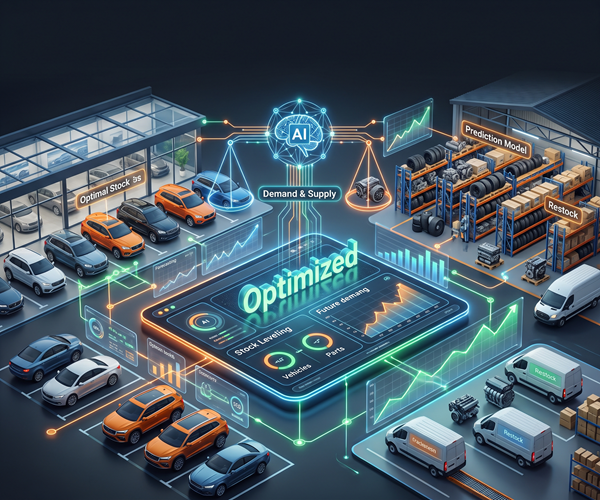 BlogAI-Powered Automotive Inventory Optimization: How to Balance Vehicle and Parts StockAI-powered automotive inventory optimization uses artificial intelligence (AI) to help businesses forecast demand, plan stock levels, and decide where vehicles and parts are needed. By studying sales trends, current inventory,...Read More
 BlogAI-Driven Dealer Management System: The Future of Intelligent Dealer Network ManagementAn AI-driven Dealer Management System builds on traditional DMS capabilities by bringing AI-powered insights, predictive analytics, and recommendations into everyday business processes. For automotive original equipment manufacturers (OEMs), distributors, and...Read More