Back to blogs
What Is a Depot Management System?

Excellon Contributors
Excellon Software brings fresh perspectives and insights on the trends shaping global sales and service networks for OEMs and distributors. Stay tuned as we explore how the Excellon Dealer Management System empowers businesses with cross‑border efficiency, intelligence, and competitive advantage.
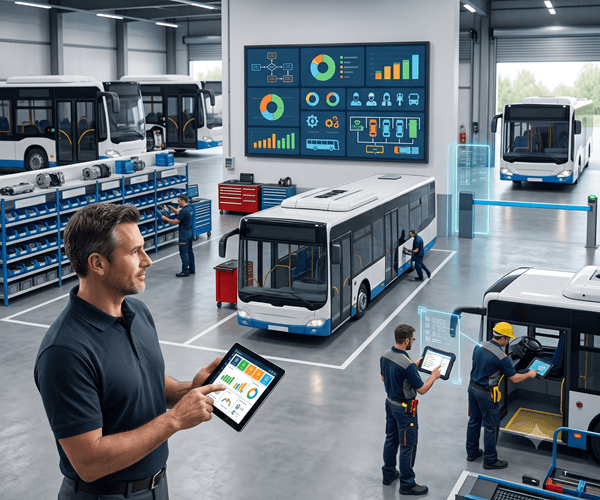
A Depot Management System (DpMS) is a centralized solution designed to manage and optimize all operational activities within a vehicle depot. It helps depot operators oversee vehicle movements, maintenance, inspections, workshop operations, spare parts inventory, technician assignments, and dispatch readiness from a single platform.
Often referred to as depot management software, a depot management system replaces manual processes, spreadsheets, and disconnected applications with an integrated digital workflow. This enables organizations to improve vehicle availability, reduce maintenance delays, increase operational visibility, and ensure vehicles remain service-ready.
Unlike a Dealer Management System (DMS), which is primarily designed to manage dealership operations such as vehicle sales, customer relationship management (CRM), service scheduling, warranty processing, finance, and parts sales, a Depot Management System focuses specifically on depot operations. Its primary objective is to streamline fleet maintenance, workshop efficiency, inspections, inventory management, and vehicle dispatch for public transport operators, logistics companies, commercial fleets, and other organizations managing large vehicle depots.
Every vehicle entering a depot triggers a chain of activities, from inward–outward gate pass processes and inspections to maintenance, spare parts allocation, and dispatch planning. When these processes rely on spreadsheets, paper records, or disconnected applications, delays, data inconsistencies, and operational inefficiencies become unavoidable.
As fleets expand and depot operations become increasingly complex, transport organizations require a centralized platform to coordinate these activities. A Depot Management System brings maintenance, workshop operations, inventory, inspections, reporting, and vehicle tracking together, giving teams complete visibility into vehicle readiness and overall depot performance.
Instead of switching between multiple systems, maintenance teams, workshop supervisors, inventory managers, and depot administrators work from a single source of truth. This improves collaboration, reduces manual effort, accelerates maintenance cycles, and provides real-time insights into depot performance.
A typical Depot Management System supports:
- Vehicle inspections and automated inspection scheduling
- Preventive and corrective maintenance via kilometer-based service tracking
- Workshop and job card management with technician and bay coordination
- Spare parts tracking with stock governance and auto-ordering
- Inward–outward tracking and gate pass processes
- Reporting and real-time operational dashboards
Why Modern Depots Need a Dedicated Management System
Passenger vehicle depots today are expected to do much more than maintain vehicles. They are responsible for improving fleet availability, reducing maintenance turnaround time, optimizing workshop capacity, controlling spare parts inventory, and ensuring every bus is ready for its scheduled service.
Meeting these expectations becomes difficult when operational information is spread across spreadsheets, registers, emails, and disconnected applications. Supervisors struggle to get a complete view of ongoing repairs, inventory teams work with outdated stock information, and depot managers spend valuable time consolidating updates instead of making operational decisions.
Utilizing dedicated Fleet Maintenance Software addresses this by creating a single source of operational truth. Every stage of the maintenance process, from gate entry and job card creation to workshop execution and reporting, is connected, giving depot teams the visibility needed to manage daily operations efficiently.
Explore Excellon DpMS: Transform Your Depot Operations with Excellon Depot Management System
Core Functions of a Depot Management System
A robust Depot Management System supports every stage of a bus’s service journey inside the depot. By connecting inspections, workshop activities, maintenance, inventory, and reporting, it helps teams execute work in a structured and efficient manner.
1. Vehicle Inspection
Every maintenance activity begins with a thorough inspection. The system enables depot teams to record defects, capture observations, and maintain a complete inspection history for every bus. By utilizing inspection scheduling linked to active vehicle usage, workshops can plan repairs proactively based on accurate, timely information.
2. Job Card Management
Once an inspection is complete, the system generates digital job cards with the required maintenance activities. Supervisors can utilize job card tracking workflows to assign work, monitor pending jobs, and execute seamless technician & bay coordination without relying on manual follow-ups.
3. Workshop & Maintenance Management
Managing workshop activities requires clear visibility into ongoing repairs, technician availability, and maintenance schedules. A Depot Management System helps workshops execute both preventive and corrective maintenance. By utilizing kilometer-based service tracking, managers can proactively schedule breakdown repairs and monitor total workshop efficiency from a single platform.
4. Spare Parts & Inventory Management
The availability of spare parts directly affects maintenance timelines. The system provides strict spare parts inventory & stock governance. It links parts to job cards, records stock movement, and supports timely replenishment through auto-ordering and reorder alerts, helping workshops avoid unnecessary repair delays.
5. Warranty & Claims Management
Warranty-related repairs require proper documentation and approvals. A Depot Management System maintains complete service records, validates warranty eligibility, and orchestrates end-to-end warranty and claim management, reducing manual effort and improving traceability with manufacturers.
6. Reporting & Operational Analytics
Depot managers need a clear view of daily operations. Real-time dashboards provide insights into workshop efficiency tracking, maintenance turnaround time, bus readiness, inventory consumption, and other operational KPIs, helping managers make informed decisions instantly.
Why Bus Depots Are Moving Beyond Spreadsheets
For years, spreadsheets have helped passenger vehicle depots track maintenance schedules, spare parts, and service records. The challenge isn’t that spreadsheets are incapable. It’s that they were never designed to manage connected depot workflows.
Consider a bus returning to the depot after completing its scheduled service. An inspection identifies a component that needs replacement. A job card is created, technicians are assigned, spare parts are issued, warranty eligibility is verified, and approvals are required before the bus can return to service. When each of these activities is managed in separate spreadsheets, phone calls, or manual registers, coordination slows down and visibility is lost. This is exactly the fragmented operating model many depots are trying to move away from.
A Depot Management System connects these workflows into a single operating model. Instead of chasing updates across teams, everyone works from the same operational information.
How a Depot Management System Supports Operational Improvement
A Depot Management System improves depot performance by creating consistency across every stage of the service lifecycle. When inspections, maintenance, inventory, and workshop activities are connected, teams spend less time coordinating tasks and more time keeping passenger vehicles ready for service.
Faster Maintenance Turnaround
Maintenance activities move faster when inspection reports, job cards, technician assignments, and spare parts are managed through a single workflow. Teams have immediate access to the information they need, reducing delays between each stage of the repair process.
Better Workshop Control
Workshop supervisors can monitor ongoing repairs, technician workload, pending jobs, and vehicle status from one place. This makes it easier to prioritize work, balance resources, and avoid bottlenecks.
Improved Spare Parts Planning
Greater Visibility Across Depot Operations
Standardized Service Workflows
Explore Further: Is Your Dealership Data Safe? The 2026 Guide to DMS Data Security
Supporting Modern Bus Depot Operations with Excellon DpMS
Managing a modern bus depot requires more than digitizing individual processes. It requires a platform that connects every stage of the service lifecycle, from inspections and job cards to maintenance, spare parts, warranty management, and operational reporting.
Excellon Depot Management System (DpMS) is designed around this connected operating model. It helps transport operators manage workshop activities, standardize maintenance workflows, improve inventory visibility, and gain real-time insights into depot performance. The result is better coordination across teams, greater control over daily operations, and buses that are ready for service when they are needed most.
Conclusion
Every passenger vehicle that enters a depot passes through a series of interconnected activities before it returns to service. Managing these activities independently makes coordination harder, increases delays, and limits operational visibility.
A Depot Management System brings these processes together, helping depots manage maintenance, workshop operations, inventory, inspections, and reporting through a single platform. As fleets grow and service expectations continue to rise, connected depot operations will play an increasingly important role in improving fleet availability, workshop efficiency, and long-term operational performance.
Discover how the Excellon Depot Management System can help you automate depot operations, optimize workshop performance, and maximize fleet availability. Contact our experts to schedule a personalized demo.
You may also Like

Financial Reports Every Dealer Principal Must Watch
For dealer principals, operational reports provide an important view of daily activities. Vehicle sales, workshop revenue, bookings, deliveries, and target achievement help track performance across departments. However, these reports only show what is happening on the surface. Relying solely on operational data often leads to a frantic…

Agriculture has always adapted to changing conditions, but today’s transformation is happening at a much faster pace. Today, farming isn’t just about heavy iron and manual labor; it is a high-tech industry driven by precision machinery, complex data, and advanced engineering. Across India, Brazil, the United States, China…