Back to blogs
How Excellon Dealer Management System Improves Agricultural Equipment Operations

Excellon Contributors
Excellon Software brings fresh perspectives and insights on the trends shaping global sales and service networks for OEMs and distributors. Stay tuned as we explore how the Excellon Dealer Management System empowers businesses with cross‑border efficiency, intelligence, and competitive advantage.
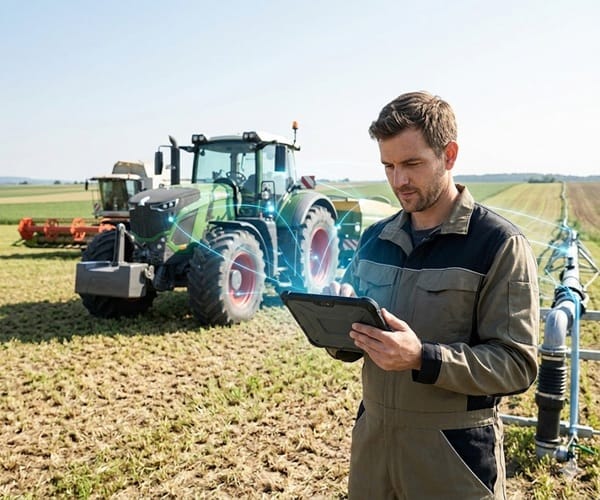
While the automotive retail sector frequently makes headlines for its digital transformation, the Agricultural Equipment (Ag-E) sector faces an even more dramatic revolution. Owners of agricultural dealerships, equipment distribution managers, and Ag-tech decision-makers are realizing that legacy, paper-based workflows or basic software systems can no longer handle the intense, specialized demands of modern farming. To survive and thrive, distributors must transition to an advanced, industry-specific platform.
From tractors and combine harvesters to seed drills, rice transplanters, power tillers, rotavators, and irrigation systems, modern farming depends on reliable equipment and equally reliable dealer networks. The global farm equipment market is expected to grow from USD 199.1 billion in 2026 to USD 350.9 billion in 2035, at a CAGR of 6.5%, according to latest report published by Global Market Insights(1).
This shift is changing the role of agricultural equipment dealerships. Selling machinery is only one part of the business. Customers expect timely deliveries, dependable after-sales support, quick access to spare parts, and service that keeps equipment running during critical farming seasons. As these expectations continue to grow, dealerships need to manage increasingly complex operations while maintaining strong relationships with OEMs and customers.
To address these evolving demands, the Excellon Dealer Management System (DMS) delivers an all-in-one, cloud-based platform built with 25 years of industry-leading distribution management expertise, helping heavy machinery and agricultural equipment networks transform their sales, service, and operations.
Why Agricultural Equipment Distribution Requires a Unique Approach
Agricultural equipment(2) dealerships operate differently from most retail businesses. Sales are influenced by planting and harvesting seasons, government subsidy programs, and regional farming practices. The sales journey itself often includes farm demonstrations, equipment customisation, financing, and long-term after-sales support.
The business model can also vary across markets, with OEMs working through distributors, dealer networks, or directly with customers. Managing tractors, combine harvesters, seed drills, rice transplanters, power tillers, rotavators, and their attachments requires a level of operational coordination that many industries simply don’t face.
Agricultural Equipment Dealerships Are Undergoing Their Own Transformation
The role of the dealership is changing. Across global markets, businesses are adapting to new customer expectations and operational demands.
From seasonal selling -> year-round customer relationships
From showroom demonstrations -> field engagement
From managing equipment -> managing equipment ecosystems
From independent operations -> connected networks
As the industry evolves, competitive advantage will be defined by how effectively operations and information flow across the entire ecosystem.
Challenges Faced by Modern Agricultural Dealerships
Agricultural dealerships manage a wide range of responsibilities that extend far beyond equipment sales.
1. Managing “The Seasonality” and Eliminating Dead Stock
Dealerships need to stock the right equipment and spare parts without creating unnecessary inventory costs. Excess stock affects profitability, while shortages during critical planting and harvest seasons can result in lost business and operational delays for farmers, where even a single equipment breakdown can lead to significant financial losses every hour. At the same time, over-purchasing creates another challenge in the form of dead stock costly parts that remain unused on warehouse shelves for years, tying up valuable capital.
To address these seasonal pressures, the Excellon Dealer Management System (DMS) combines advanced Spares Management and Inventory Management capabilities with the AI-powered ExcellonPulse Engine. By analyzing network-wide demand trends, it optimizes stocking strategies before seasonal peaks. This allows dealerships to move from reactive planning to precision-driven logistics, reducing carrying costs while preventing critical stockouts.
2. Supporting Remote Field Service
Unlike many industries, service often takes place at the customer’s farm. Technicians need access to equipment history, work orders, warranty information, and spare parts while working in remote locations.
This is where service efficiency often breaks down. Without access to the right information at the right time, even skilled technicians are forced to spend more time diagnosing than resolving.
To bring the full capability of the dealership directly to the farm, Excellon delivers mobile-first applications designed for the field. Technicians can access full equipment histories, digital work orders, and spare parts availability from a tablet or phone. Crucially, offline-sync capabilities ensure that even in rural areas with poor connectivity, field teams can log hours and complete jobs without disruption.
3. Maintaining Equipment Uptime
A delayed repair during planting or harvest can affect farming operations. Customers expect dealerships to respond quickly and minimise equipment downtime. During critical farming cycles, equipment downtime can cost $5,000 to $15,000 per hour in lost productivity, and farms relying on reactive maintenance can lose an average of 180 hours annually to unplanned failures.
To protect farmers against these costly delays, Excellon’s Service Management module shifts the dealership from reactive repairs to proactive asset care. By leveraging historical data and tracking usage hours, the DMS alerts dealers when preventive maintenance is due, allowing them to service a machine before it breaks down mid-harvest.
4. Handling Equipment Configurations
A tractor sale often includes multiple attachments rotavators, seed drills, sprayers, or loaders. Tracking these mixed configurations as a unified bundle while managing their separate lifecycles and warranties is an administrative nightmare.
To untangle this complexity, the platform features robust Configuration and Asset Lifecycle Management. It seamlessly tracks complex kits, ensuring that bundled equipment groups are managed efficiently as single sales transactions while preserving distinct warranty coverages and service histories for every individual attachment.
5. Managing Unified Agricultural Inputs (Agro-Chemicals & Machinery)
Modern agricultural dealers rarely sell just machinery. They also distribute seeds, fertilizers, and agro-chemicals. Managing heavy machinery configurations alongside chemical expiry dates and batch numbers usually requires disjointed, separate software systems.
To eliminate the need for juggling multiple disconnected systems, Excellon provides a unified platform that natively supports Agro-Chemical Distribution alongside heavy equipment. It offers complete supply chain visibility, batch/lot tracking, expiry management, and automated Scheme & Campaign Management to help dealers efficiently drive secondary sales of fertilizers and seeds alongside their hardware.
6. Managing Warranty and Pre-Delivery Inspections (PDI)
Pre-delivery inspections and warranty management are critical for customer satisfaction and OEM compliance. However, relying on paper forms or manual data entry for these processes leads to inaccurate record-keeping, delayed warranty claims, and a disconnected ownership experience.
To streamline these critical checkpoints, Excellon digitizes the entire PDI and warranty lifecycle within a single system. Dealerships can capture inspection data instantly via mobile devices, process multi-tier OEM warranty claims automatically, and maintain a flawless digital record of every machine from the moment it leaves the lot.
7. Serving rural customers
To ensure uninterrupted service delivery even in remote or low-connectivity areas, Excellon equips dealership teams with mobile-enabled workflows optimized for low-network environments. Sales representatives and technicians can access critical customer data, complete forms, and log service activities with minimal internet connectivity, while the system intelligently synchronizes all updates automatically once stronger network coverage is available.
8. Coordinating multiple operations
Sales, inventory, service, warranty, parts, and customer management often involve different teams. Keeping everyone aligned is an ongoing business challenge. In many dealerships, teams rely on calls, spreadsheets, or manual updates, which slows down decisions and increases the risk of miscommunication and creates an unmanageable level of operational complexity.
To eliminate these operational silos, Excellon consolidates every dealership function into a single, centralized Dealer Management System. By providing a unified, real-time environment for OEMs, distributors, and dealers, the solution ensures all teams are perfectly aligned, accelerating decision-making and transforming complex daily activities into a smooth, connected workflow.
How Connected Dealership Operations Drive Growth
As dealership operations become more complex, disconnected processes can slow decision-making and reduce visibility across the business. A Dealer Management System brings these functions together into a single, connected environment, enabling OEMs, distributors, and dealers to operate with a clear, real-time view of operations and coordinate more effectively across the network.
Better inventory management
Improving equipment uptime
Equipment lifecycle management
Simplified warranty and PDI
Improved reporting
Connected field operations
A connected customer experience
Choosing the Right Operational Platform for Agricultural Dealerships
Agricultural equipment dealerships are not merely selecting a software tool; they are choosing the operational backbone that will influence how efficiently their entire network functions across sales, service, parts, and customer engagement.
The real question is not what the system can do today, but whether it can support the way agricultural distribution is evolving across regions like India, Brazil, and North America, where seasonal cycles, field operations, and customer expectations differ but complexity remains constant.
A strong decision framework for selecting this technology typically comes down to a few strategic considerations, starting with how well the system aligns with actual agricultural network operations. It should reflect the reality of dealership networks, where OEMs, distributors, and dealers operate in connected but distinct roles, and where field activity is as critical as showroom operations.
Furthermore, because agricultural businesses rarely operate from a single location, the chosen platform must connect distributed operations by enabling consistent visibility across branches, field teams, and partner networks rather than functioning as isolated instances.
Support for operational continuity in real-world conditions is equally critical. Dealership operations extend far beyond office environments, meaning access to reliable, usable information becomes essential whether a team is performing field service during harvest or conducting equipment demonstrations in remote locations.
Alongside mobility, the system must be capable of bringing structure to complex equipment lifecycles. Modern agricultural machinery involves long service cycles, multiple attachments, and evolving maintenance requirements, requiring a system that supports continuity across the entire equipment journey rather than simply capturing transactional records.
Finally, the underlying platform must offer true scalability across markets and business models. From emerging agricultural economies to mature markets, dealership networks continuously evolve. A successful operational backbone will adapt to these changes in structure, scale, and customer expectations without causing operational disruption.
Final Thoughts
Agricultural equipment distribution is evolving into a connected ecosystem where success depends on how effectively OEMs, dealers, distributors, field teams, and customers work together. As expectations around equipment uptime, service responsiveness, and operational visibility continue to grow, organisations will need greater coordination, real-time information flow, and continuity across the network.
At Excellon Software, the focus is on enabling this transformation through a Dealer Management System purpose-built for agricultural and heavy equipment networks. The future advantage will belong to organisations that move beyond disconnected operations and build integrated, data-driven ecosystems capable of delivering efficiency, reliability, and long-term customer value.
You may also Like
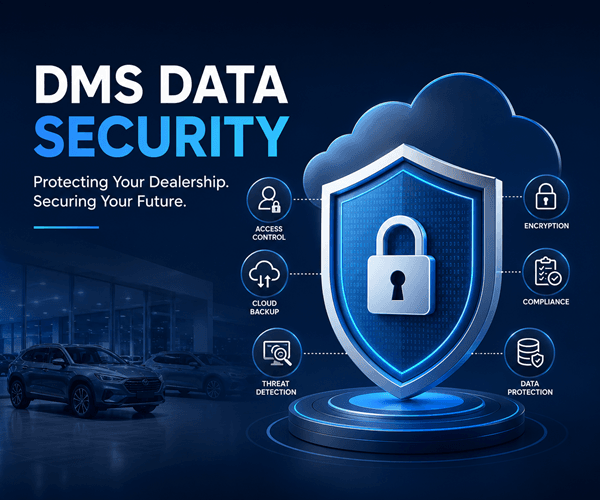
Is Your Dealership Data Safe? The 2026 Guide to DMS Data Security
In 2026, data is the lifeblood of automotive retail and distribution. Every day, dealerships process an incredible volume of highly sensitive information, from customer personally identifiable information (PII) and financial records to proprietary OEM blueprints and inventory data. However, this wealth of information has a dark.…

How Excellon DMS Helps Heavy Equipment Dealers Streamline Sales and Service