
Back to blogs
Is Your After-Sales Service Losing You Customers? 7 Red Flags to Watch For

Excellon Contributors

A customer drives a brand new vehicle out of the dealership. The sales team feels a sense of completion. They hit their targets.
The revenue is on the books. It looks like another successful transaction. But for the person behind the wheel, the relationship is just starting.
The real test begins weeks or months later. It might be the first scheduled service visit. It could be a warranty claim or a request for a spare part.
Sometimes it is just a small issue that needs a quick look. This is the specific moment when a brand can strengthen loyalty or quietly lose it. Many automotive companies put all their energy into sales. They focus on dealer incentives, marketing campaigns, and retail targets.
The front end of the business gets all the attention. Meanwhile, the back end often runs on processes that were designed years ago. That gap does not always show up on a dashboard immediately.
Customers do not always complain out loud. They simply stop coming to your service centers. They choose independent garages or move to a different brand when it is time for their next purchase.
Research from Bain & Company(1) has shown that improving customer retention by 5% percent can increase profitability significantly, in some cases by as much as 95%. Even so, most organizations give far more resources to getting new sales than to the experience after the sale. After-sales operations influence repeat purchases, service revenue, and the profitability of the dealer.
When these systems fail, the damage surfaces slowly but spreads across the entire network. The question you should ask is simple.
Is your service operation building trust, or is it silently driving people away? Before the damage shows up in falling revenue, warning signs appear in your daily operations. These seven signals usually show up first.
Why After-Sales is a Strategic Growth Lever?
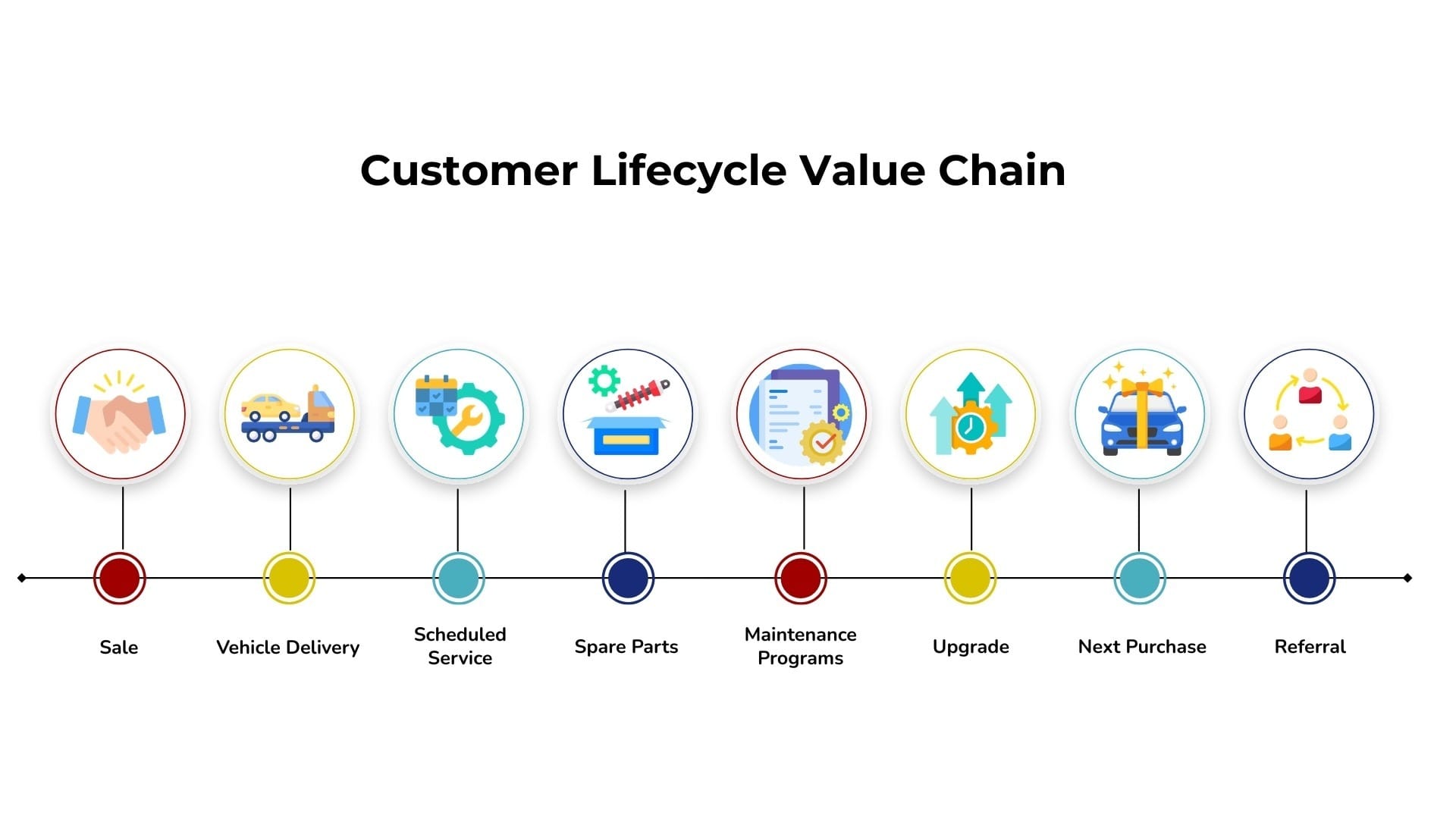
Automotive retail has changed in the last decade. Vehicles now have complex electronics and software. Maintenance cycles continue for many years after the initial sale. Because of this, service operations create steady revenue throughout the life of the vehicle. For many brands, after-sales provides a huge portion of total dealership profit.
Industry studies consistently highlight the importance of the aftermarket.
According to McKinsey research(2), Service department margins are high, sitting between 45% – 55%. These margins are also very resilient. Even when the economy takes a hit, people still have to repair and service their vehicles.
Customers also want a different experience than they did in the past. They track their online orders and book appointments through apps. They expect updates in real time.
Sitting at a service desk with no idea what is happening with a repair feels very outdated. The service center is not a simple repair shop anymore. It is a way to stay connected with the customer.
Organizations that manage this well build long-term relationships.
Explore Further: Achieve Better After-Sales Service Management with Excellon DMS
7 Warning Signs Your After-Sales Service Operations Are Breaking Down
Certain patterns show that your systems are failing. These issues might seem small, but together they damage the whole business.
1. Service Data Lives in Silos
Many dealerships use separate systems for sales, service, warranty, and inventory. Each department has its own version of the customer data. Service advisors often have to search through multiple tools just to find the history of a vehicle. Warranty teams might have to ask for documents through long email chains.
These small delays add up. When data is scattered, managers cannot see the full picture. A car might come in three times for the same leak, but nobody notices because the records are a mess. Decisions end up being based on guesses rather than hard facts.
2. Slow Service Turnaround is Seen as Normal
Customers notice this. They feel like their time is not being respected. A simple repair that takes several days creates frustration. Often, the real problem is in the planning system. Inventory levels do not match what is actually needed. Bookings do not align with how many technicians are available. These operational delays eventually destroy trust. When customers look for faster options elsewhere, your revenue starts to drop.
3. Dealers Act Like Independent Islands
Dealer networks often grow very fast across different regions. Each location slowly develops its own way of doing things. They have different communication styles and different timelines. To a customer, every dealership has the same logo. On the inside, the experience is totally different.
One service center might give quick updates while another is a total mystery. Without a central view, it is difficult to keep things uniform and cannot promise a specific level of service if every dealer follows their own rules.
4. Warranty Leakages and Revenue Gaps
Warranty management is one of the most difficult parts of the business. Claims need perfect documentation and part verification.
In many companies, these steps still rely on manual work. Documents move through emails and approvals take too long. Errors are common during the submission process. Small mistakes lead to rejected claims or late payments.
For a large network, that is a massive financial loss. You need accuracy and transparency to keep your margins safe.
5. Customers Only Get Updates When They Call
Think about the typical experience today. A customer drops off a car and waits. Hours go by. Sometimes a whole day passes. Finally, the customer calls the workshop to see if the car is ready.
This reactive style of talking to customers creates a lot of friction. People expect to see progress the same way they track a ride-share or a delivery. Updates on status and parts should be sent automatically.
When communication is manual, your team spends all their time answering phones instead of managing the workshop. Digital channels reduce stress for the customer and make the shop more efficient.
6. Service Operations Run Reactively
Many service centers operate in response mode. A vehicle arrives with a complaint. Technicians diagnose the issue. Repairs begin. This reactive cycle repeats continuously. Yet service data holds valuable insights about recurring issues, component failures, and maintenance patterns.
Organizations that study this data can predict what a customer will need next. Sending a reminder for preventive maintenance builds trust. Without these insights, your team is just putting out fires every day.
7. Leadership Lacks Real-Time Visibility
Which dealerships face service backlogs?
Where are warranty claims getting delayed?
Which spare parts frequently run out of stock?
Which service issues appear repeatedly across vehicles?
Without real-time operational visibility, decisions rely on historical summaries instead of current operational data. Modern service networks require live insights into dealer performance, service turnaround time, inventory movement, and customer feedback. Organizations that gain this visibility manage their networks more effectively.
Explore Further: How to Improve After-Sales Service & Customer Satisfaction with Dealer Management System (DMS)
The Cost of Ignoring These Signals
What High-Performing Teams Do Differently
The high-performing organizations treat service as a core part of the business. They standardize the way work flows through every dealer. Interactions follow a clear set of rules. Inventory is matched to what customers actually need.
Information moves between departments instead of being stuck in one place. Warranty claims are handled through a digital process. Communication is clear and happens throughout the entire visit.
Leaders can see exactly where the bottlenecks are in real time. Technology is what makes this coordination possible. A unified platform that links sales, parts, and service helps a company keep everything clear.
This is why a modern dealer management platform is so important. Excellon Dealer Management System gives automotive networks a single place to run their business. The platform connects everything from sales and service to parts and finance in one system.
- Service advisors can see the full history of a vehicle in a second.
- Parts teams can track every item in the warehouse.
- Warranty approvals move through a structured path.
- Leadership can see exactly how the network is performing at any moment.
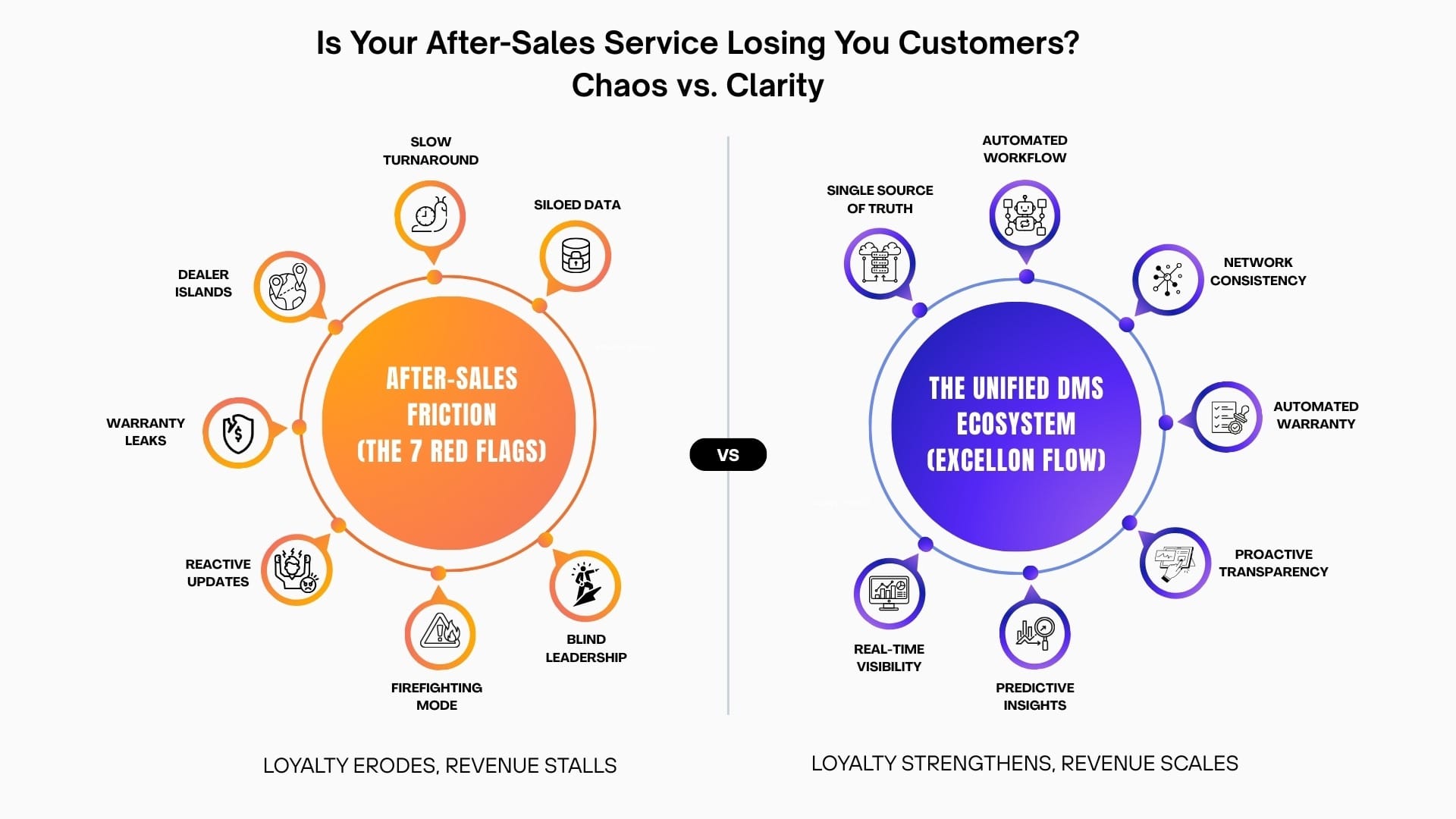
Instead of using tools that do not talk to each other, dealerships work on a synchronized system. This leads to faster repairs and a better experience for the customer across every location.
Final Thought
Companies that focus on service will keep their revenue stable for the long haul.
Those that overlook the operational cracks often discover the consequences only after customers have already moved elsewhere.
The warning signs are usually visible early. The question is whether organizations choose to address them before the damage spreads across the network.
You may also Like


Dealer management software rarely comes up during strategic planning. It sits in the background, expected to support whatever comes next. Yet over the last few years, the role of the DMS has changed significantly. What was once designed to record transactions now….